

What US Retailers Look for When Sourcing Religious Products

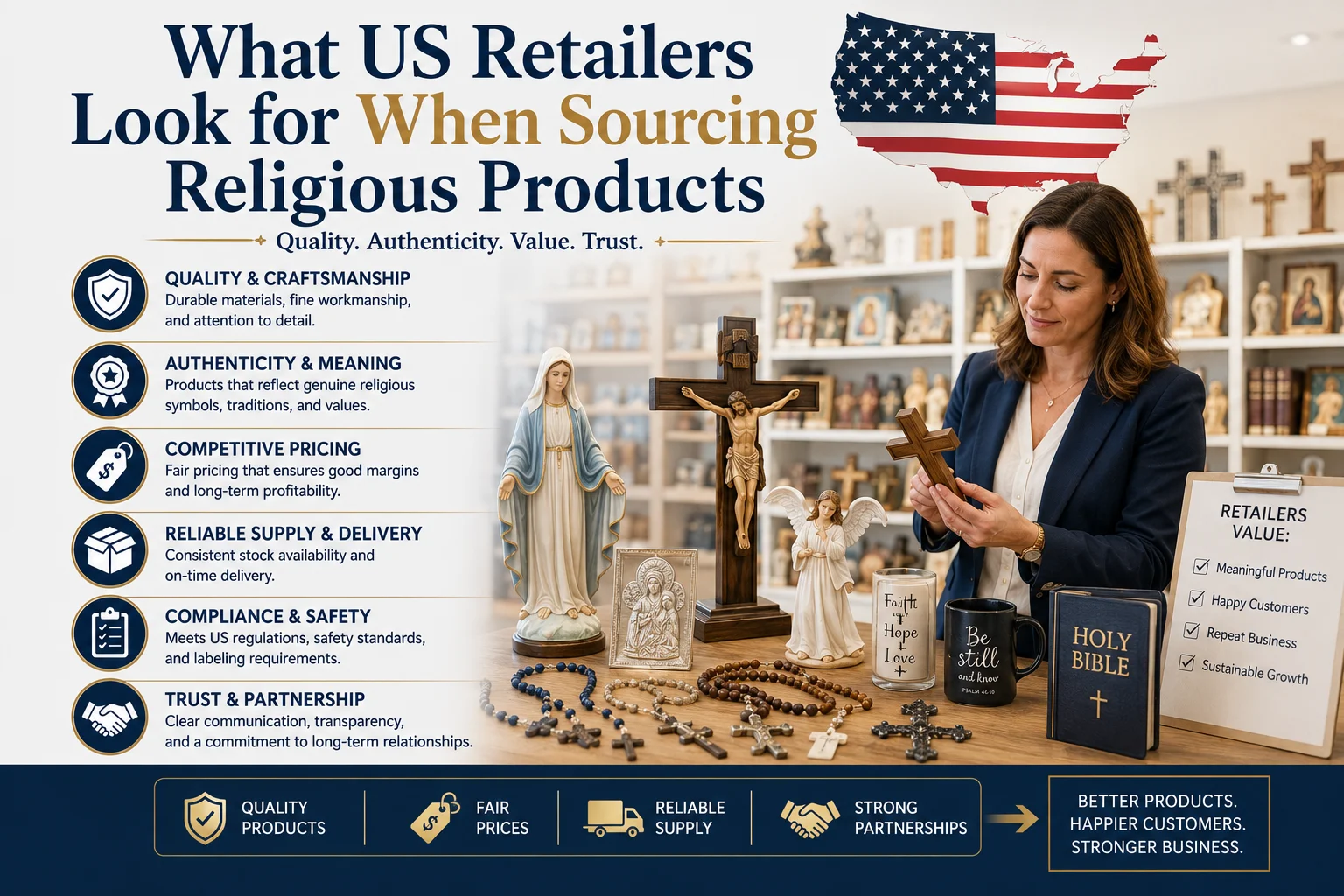
Requirements by retailers for sourcing religious products from India to US
The market for religious and cultural products in the United States has evolved significantly over the past decade. What was once considered a niche retail category now serves a growing and diverse customer base that values cultural authenticity, craftsmanship, and meaningful products.
From independent gift stores and specialty retailers to cultural boutiques and online marketplaces, businesses across the country are responding to increasing demand for religious products that reflect heritage, tradition, and spiritual significance. Cities such as Houston, Texas; Dallas, Texas; Edison, New Jersey; Fremont, California; San Jose, California; Chicago, Illinois; Atlanta, Georgia; Seattle, Washington; and New York City continue to experience strong demand for cultural and religious products driven by active communities, cultural celebrations, and expanding retail opportunities.
As competition grows, retailers are becoming more selective about the products they offer and the suppliers they work with. Understanding what retailers prioritize when sourcing religious products provides valuable insight into the trends shaping this expanding market.
Understanding Customer Demand Comes First
Successful retailers understand that sourcing decisions begin with understanding customer needs.
Communities across the United States have unique cultural preferences, traditions, and purchasing habits. Retailers serving customers in Houston may see strong demand for products related to major community celebrations, while stores in Edison or Fremont may focus on year-round demand driven by established cultural and religious communities.
Many retailers carefully study customer purchasing behavior before expanding their inventory. They pay attention to festival seasons, community events, cultural trends, and product requests to ensure they stock items that resonate with their target audience.
Rather than simply following industry trends, successful retailers often focus on understanding the traditions and cultural practices that drive purchasing decisions within their local communities.
Authenticity Matters More Than Ever
One of the most important factors influencing purchasing decisions today is authenticity. Customers are increasingly looking for products that reflect genuine cultural heritage rather than mass-produced alternatives. Whether purchasing a religious idol, decorative item, ceremonial product, or cultural gift, consumers want products that represent traditional craftsmanship and cultural significance.
Retailers recognize that authenticity builds trust. Customers who feel connected to a product’s origin and craftsmanship are often more likely to become repeat buyers and recommend products to others.
This is especially important in markets such as Chicago, Atlanta, and New York City, where cultural diversity creates opportunities for retailers to serve customers seeking authentic products from around the world.
For many businesses, sourcing authentic products is not simply about inventory management. It is about creating a shopping experience that respects and celebrates cultural traditions.
Quality Is Essential for Long-Term Success
While authenticity is important, quality remains equally critical.
Retailers understand that product quality directly impacts customer satisfaction, online reviews, and repeat business. Religious products often hold personal, cultural, or spiritual significance, making quality expectations even higher.
When evaluating products, retailers commonly consider:
- Material quality
- Craftsmanship and detailing
- Durability
- Packaging standards
- Product consistency
- Visual appeal
Customers expect products that look professional, maintain their appearance over time, and accurately represent the cultural traditions they are associated with.
Businesses that consistently deliver quality products often gain a competitive advantage in the marketplace.
Variety Helps Retailers Serve Diverse Audiences
The United States is home to diverse communities with varying cultural preferences and traditions. As a result, retailers increasingly seek product variety when sourcing inventory. Offering a broader selection allows businesses to serve different customer needs while creating opportunities for cross-selling and repeat purchases.
Popular categories often include:
- Hindu idols
- Religious statues
- Temple décor
- Spiritual gifts
- Festival decorations
- Home worship products
- Handcrafted cultural artifacts
- Traditional decorative items
Retailers in cities such as San Jose, Fremont, and Seattle frequently look for product selections that appeal to both long-established community members and younger generations seeking meaningful connections to their cultural heritage.
A diverse inventory also allows businesses to adapt more effectively to changing customer preferences throughout the year.
Festival Readiness Is a Major Consideration
Seasonal demand plays a significant role in the religious products industry. Major celebrations such as Diwali, Navratri, Ganesh Chaturthi, Janmashtami, and temple anniversaries often create substantial increases in customer demand. Retailers must plan months in advance to ensure they have sufficient inventory available during peak periods.
Stores that fail to prepare for seasonal demand risk missing sales opportunities and disappointing customers.
Retailers often prioritize suppliers who can provide reliable inventory planning, consistent availability, and timely delivery schedules. Having access to the right products before major celebrations helps businesses meet customer expectations and maximize seasonal revenue opportunities.
In cities like Houston, Edison, and Atlanta, where cultural celebrations attract large community participation, festival preparation can be one of the most important aspects of inventory management.
Reliable Supply Chains Build Retail Confidence
Product quality and authenticity are important, but reliability often determines long-term business relationships.
Retailers depend on suppliers who can consistently deliver products on time and maintain inventory availability throughout the year. Unexpected delays, inconsistent stock levels, and supply chain disruptions can affect customer satisfaction and business performance. When evaluating suppliers, retailers often look for:
- Consistent communication
- Reliable fulfillment processes
- Inventory stability
- Product consistency
- Professional export and logistics support
Retailers understand that dependable supplier relationships contribute directly to business growth and customer trust.
As the religious products market continues to expand, supply chain reliability is becoming an increasingly important competitive advantage.
Regional Trends Across Major US Markets
While demand for religious products exists nationwide, purchasing trends often vary by region.
Houston and Dallas, Texas
These cities continue to experience growth in cultural communities, religious institutions, and community organizations. Retailers often focus on products that support large-scale celebrations, temple activities, and family traditions.
Edison, New Jersey
Edison has become one of the most recognized cultural hubs in the United States. Retailers frequently seek a wide variety of religious and cultural products to serve an active and engaged customer base.
Fremont and San Jose, California
The Bay Area remains an important market where consumers value quality, authenticity, and craftsmanship. Retailers often emphasize premium products and diverse inventory selections.
Chicago, Illinois
Chicago’s multicultural population creates opportunities for businesses offering authentic cultural and religious products that reflect various traditions and heritage backgrounds.
Atlanta, Georgia
Atlanta continues to see growth in cultural events, community organizations, and religious celebrations, contributing to increased demand for traditional products.
Understanding these regional differences helps retailers make more informed sourcing decisions and better serve their customers.
The Rise of Online Retail Has Changed Expectations
The growth of e-commerce has transformed how religious products are purchased and distributed throughout the United States.
Customers can now access cultural and religious products regardless of location, creating opportunities for retailers to serve nationwide audiences.
As online shopping continues to expand, retailers increasingly prioritize:
- Consistent product quality
- Reliable inventory availability
- Professional product presentation
- Diverse product offerings
- Strong supplier relationships
Businesses that successfully combine quality products with dependable sourcing strategies are better positioned to compete in both local and national markets.
Looking Ahead
The future of the religious products market in the United States remains promising. Growing cultural diversity, increased appreciation for authentic craftsmanship, expanding community celebrations, and greater access to global products are all contributing to continued market growth.
Retailers who understand these trends and prioritize authenticity, quality, variety, and reliability will be better positioned to meet evolving customer expectations. As demand continues to expand across major markets such as Houston, Edison, Fremont, Chicago, Atlanta, and beyond, businesses will continue seeking trusted sources for products that celebrate culture, tradition, and heritage.
Companies such as Shreem Overseas support this growing market by providing retailers with access to authentic Indian religious and cultural products that reflect traditional craftsmanship while meeting the needs of modern consumers across the United States.
Frequently Asked Questions
- What factor do retailers consider when sourcing religious products?
Indian cultural products are gaining popularity due to growing cultural diversity, increased awareness of Indian traditions, and rising interest in authentic handcrafted products that carry cultural and spiritual significance - Which US cities have strong demand for religious and cultural products?
Indian cultural products are gaining popularity due to growing cultural diversity, increased awareness of Indian traditions, and rising interest in authentic handcrafted products that carry cultural and spiritual significance. - Why is authenticity important when sourcing religious products?
Authentic products help preserve cultural traditions, offer greater craftsmanship, and provide customers with meaningful products that reflect their heritage and beliefs. - What religious products are most popular with US consumers?
Popular products include Hindu idols, religious statues, temple décor, spiritual gifts, cultural artifacts, festival decorations, and home worship items. - How do festivals influence retailer purchasing decisions?
Major celebrations such as Diwali, Navratri, Ganesh Chaturthi, and Janmashtami often create increased demand, encouraging retailers to prepare inventory well in advance. - How can retailers ensure a reliable supply of religious products?
Retailers often work with experienced manufacturers and exporters that provide consistent quality, dependable inventory management, and reliable delivery schedules. - Are religious products only purchased by religious organizations?
No. Many consumers purchase religious and cultural products for homes, gifting, cultural events, spiritual spaces, community centers, and personal collections.